
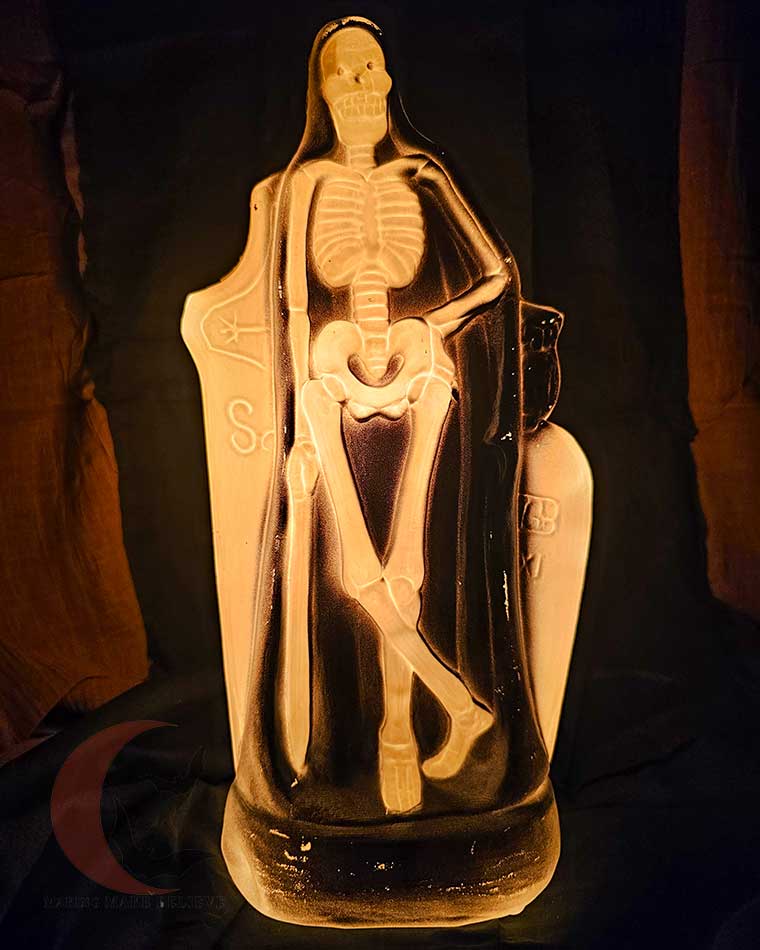
Do you have a favorite vintage Halloween collectible? While I love all things All Hallows’ Eve, the pieces that are most near and dear to my heart are these peculiar plastic light-ups. Generally, plastic isn’t my go-to. I gravitate toward wood, paper, glass, and metal – so these vintage Halloween blow molds are more the exception than the rule. I think my obsession comes from childhood when plastic decor was new and trending. In addition to blow molds, melted plastic and vacuform were everywhere. For me, they just carry a sense of nostalgia for simpler times.
As for collecting? I’m not overly picky about snapping these up. If the opportunity presents itself, the price is right, and I like it – it comes home with us. I simply can’t pass them up!
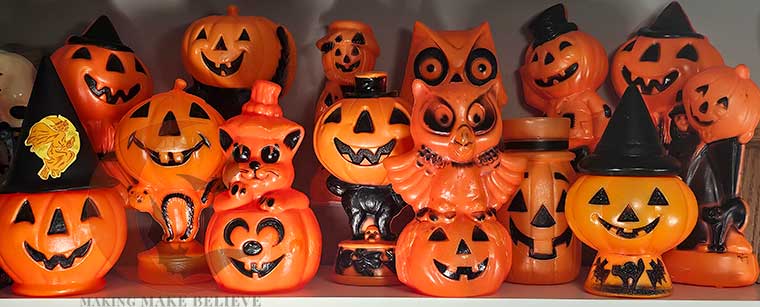
Today, we’re wrapping up our tour of the Museum of Mischief with part three! We’re shining a light on vintage Halloween blow molds by General Foam Plastics, Star Band, and a couple of fun bonus pieces. So, if you’re as charmed by these glowing retro lanterns as I am, grab a seat and let’s explore the collection.

Calling all mid-century Halloween enthusiasts! Pin this vintage Halloween blow mold for retro inspiration!
General Foam Plastics was founded by Burk Zanft and Ascher Chase in 1955 in Portsmouth, Virginia. They leased a small warehouse to manufacture pool toys and styrofoam pipe insulation, but by the 1960s they jumped on the blow mold bandwagon with their first product – a pumpkin candy pail.
GFP continued to grow throughout the 1960s, and during the 1970s they bought out Beco Products, MSL Plastics, and Star Band, further expanding their product line. Though their blow mold business was successful, their main focus was on artificial Christmas trees.
General Foam continued to diversify in the upcoming decades, adding garland, sleds, toys, coolers, and even pools to their ever-expanding catalog. They built and managed their own systems, designed their own machines, and built a nationwide distribution network with their own trucking fleet. They had facilities in five states as well as China and Mexico.
Zanft passed away in 1996, and in 2000, Empire, teetering on the edge of bankruptcy, sold GFP its entire inventory, production facility, and molds.
Chase retired in 2002, and by 2017 the company was offered up for sale due to a shifting retail market, foreign competition, and rising costs. By March 2018, after more than 60 years in business and having not found a buyer, the company sold off its assets and remaining inventory. The final chapter for major blow mold manufacturers had come to a close.
Today, these enchanting lanterns can command quite a chunk of change compared to their original price tag and are highly sought after by older collectors seeking nostalgia as well as younger ones who have discovered their charm.
Star Band Plastics was founded in 1948 in New York by Leon Cardon and Carl Marc, and soon after moved to Portsmouth, Virginia. Initially, the product line focused on satin-wrapped, unbreakable ornaments, but by the late 1950s and 60s they became known for their aluminum Christmas trees.
Also in the 1950s, the company introduced vacuum forming into its product line, producing molded plastic Halloween masks and holiday wall signs. And by 1966, Star Band joined the blow mold craze and began producing holiday light-ups.
In 1976, facing severe financial struggles, Star Band’s assets were liquidated, with its blow mold and Christmas tree divisions acquired by General Foam Plastics.
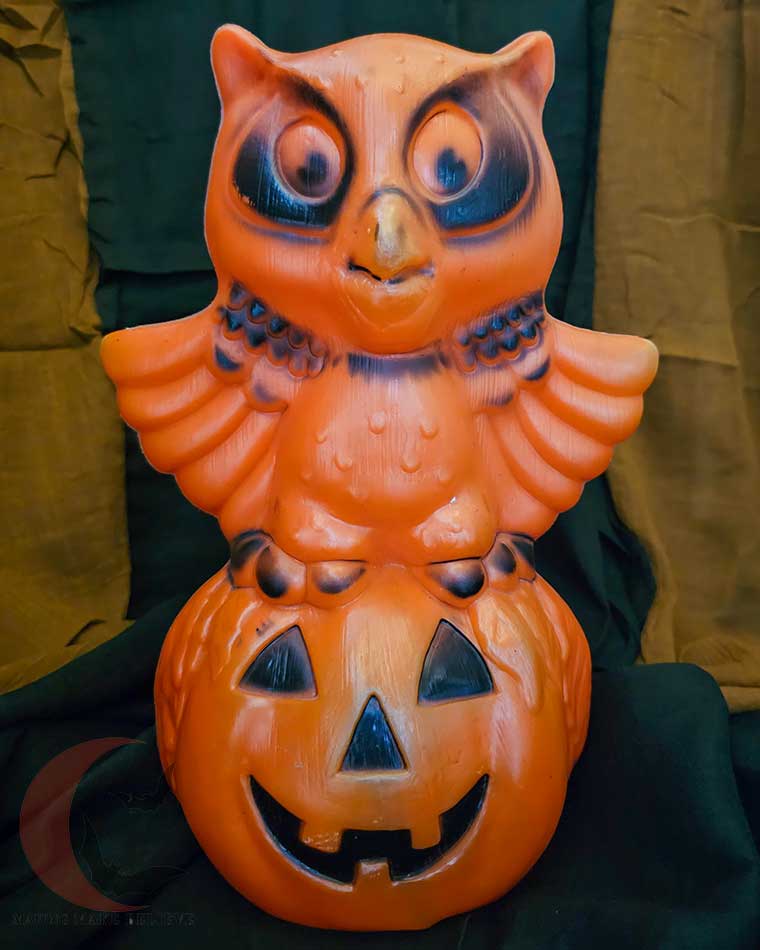
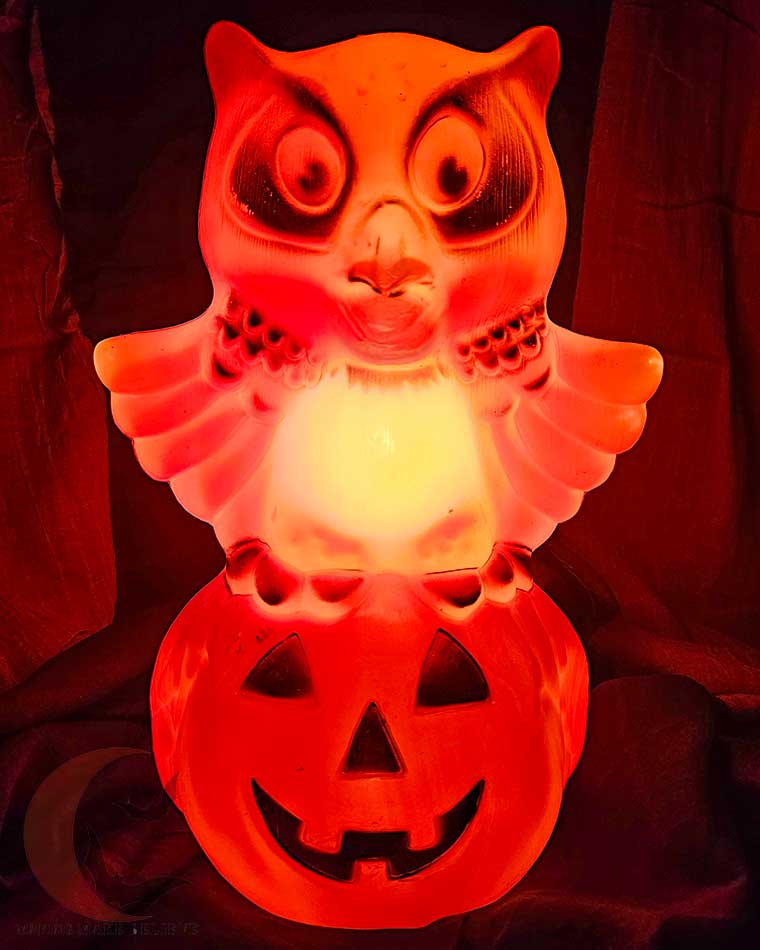
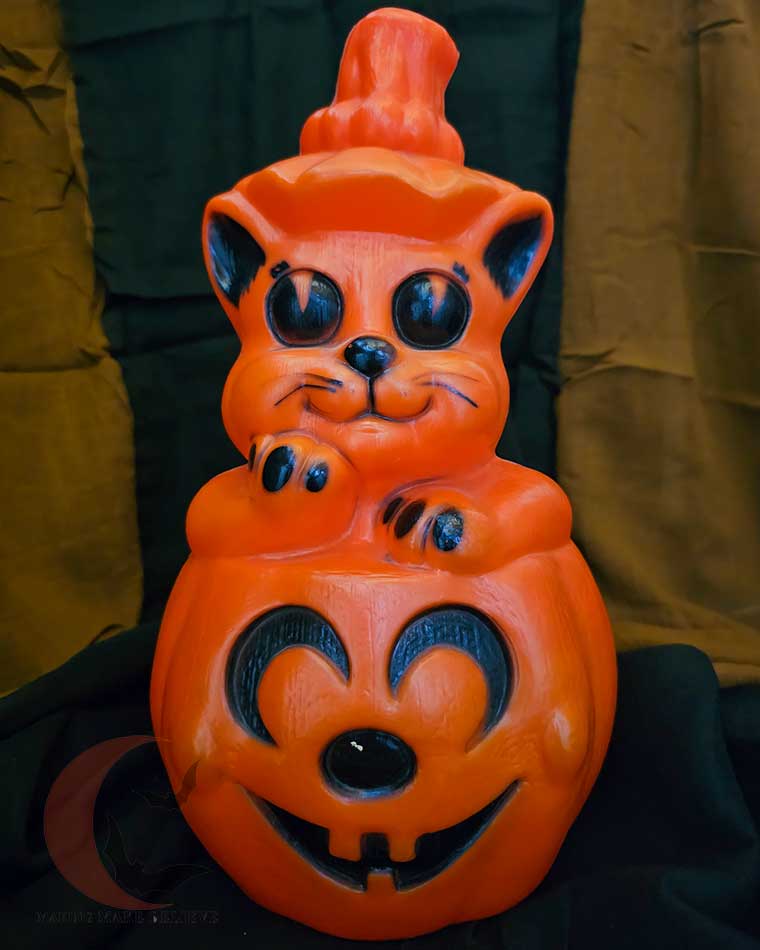
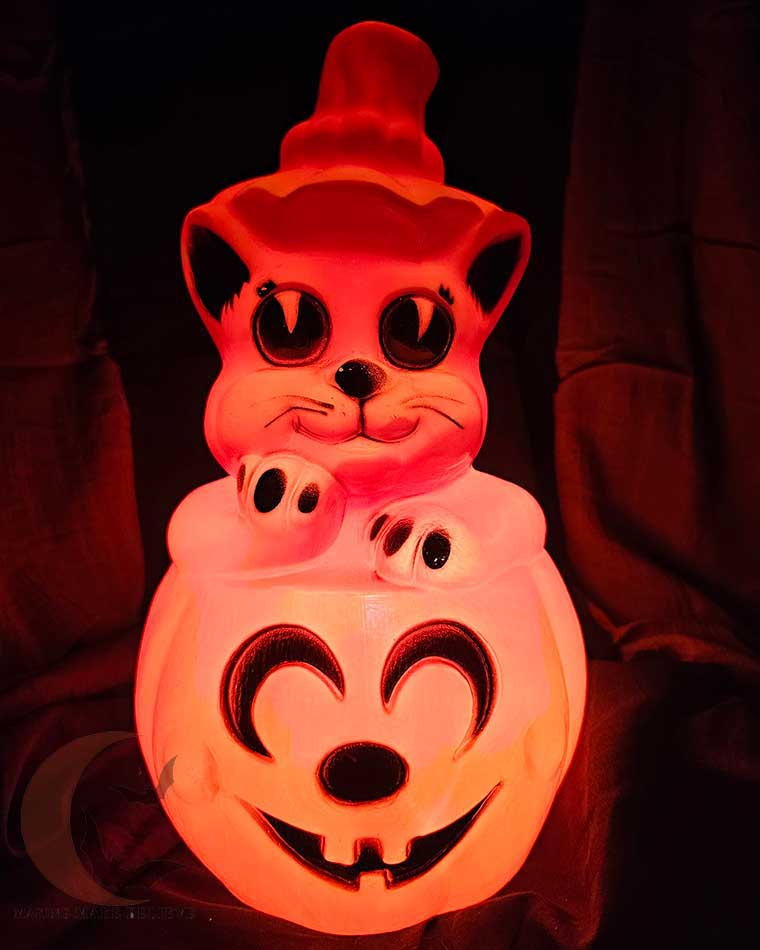
The Owl & Pumpkin Lamp and the Cat & Pumpkin Lamp were produced by Star Band for less than 2 years, from 1974 to 1976. While the lamps are similar in their concept, the jack-o’-lanterns have very different facial expressions. Both the owl and the cat are very cartoon-like in style and are more playful than petrifying. Sadly, despite GFP acquiring the molds, these two lamps were never reproduced.
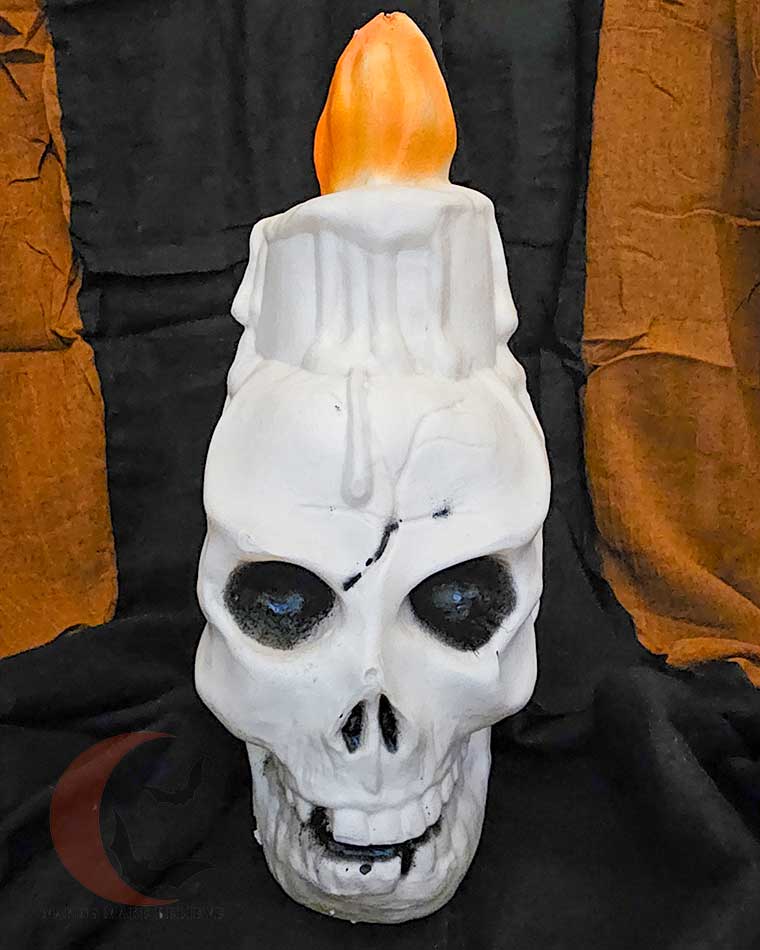
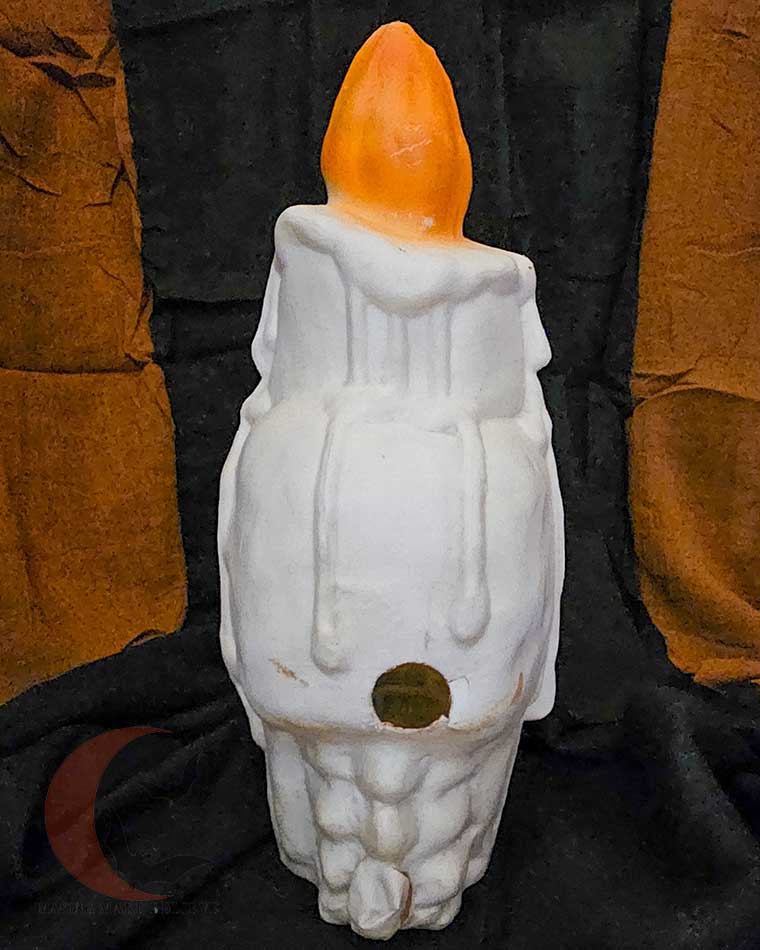
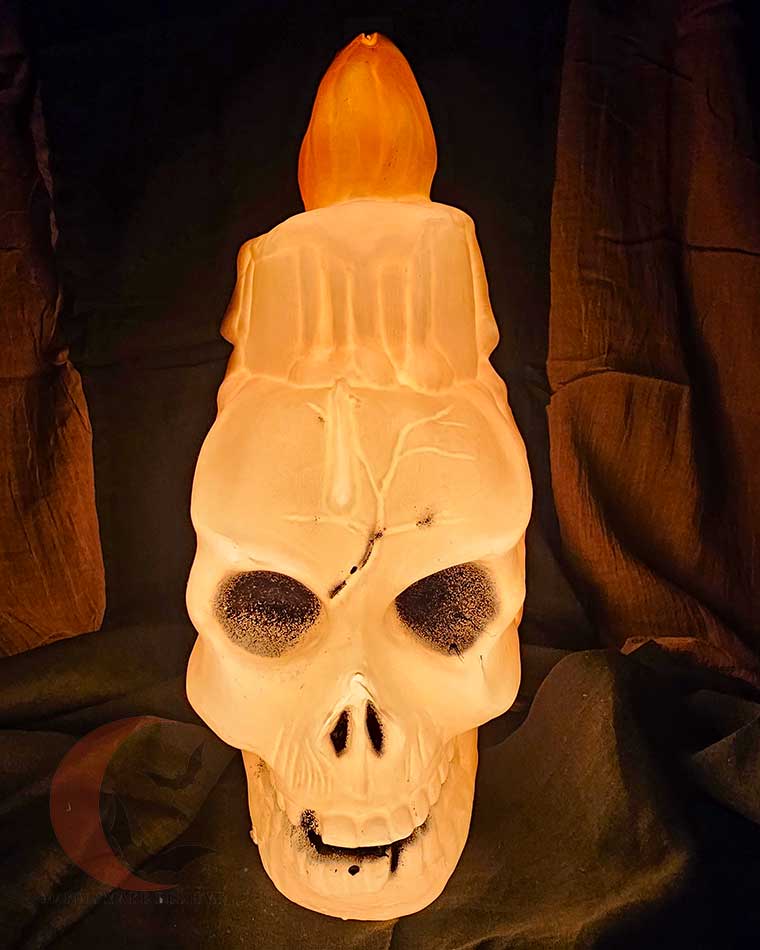
Another short production run (1974-1976) was the Star Band Skull Candle Lamp. I stumbled across this online many moons ago and, until recently, I was unaware of who manufactured this creepy cranium. A spooky skull is topped by a large candle dripping melted wax – a very different vibe than the cat and owl light-ups!
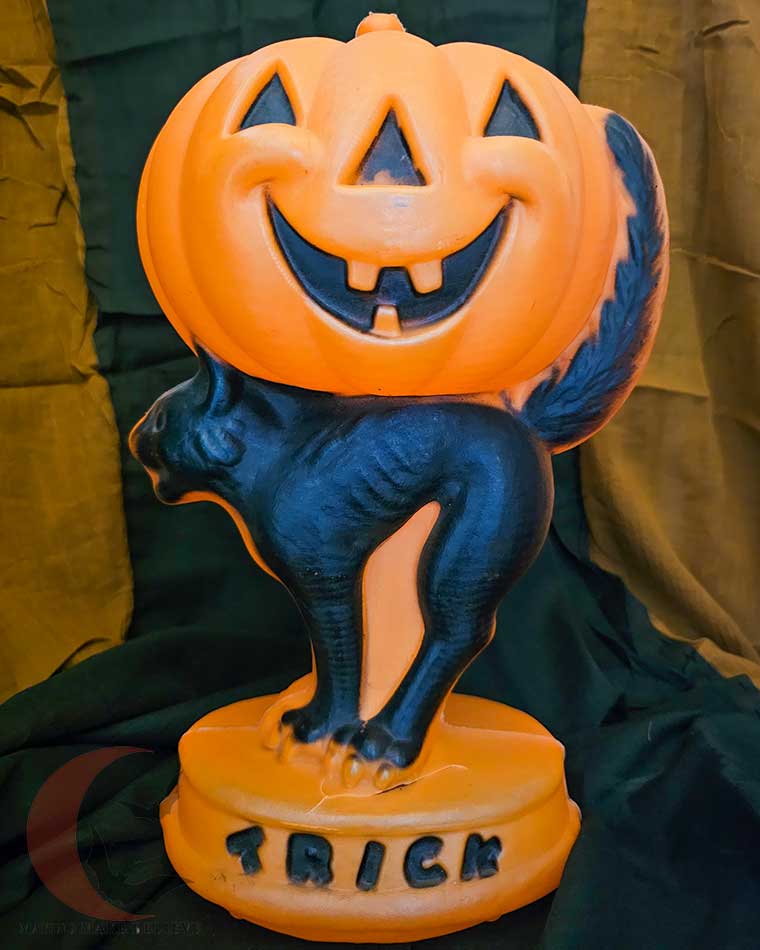
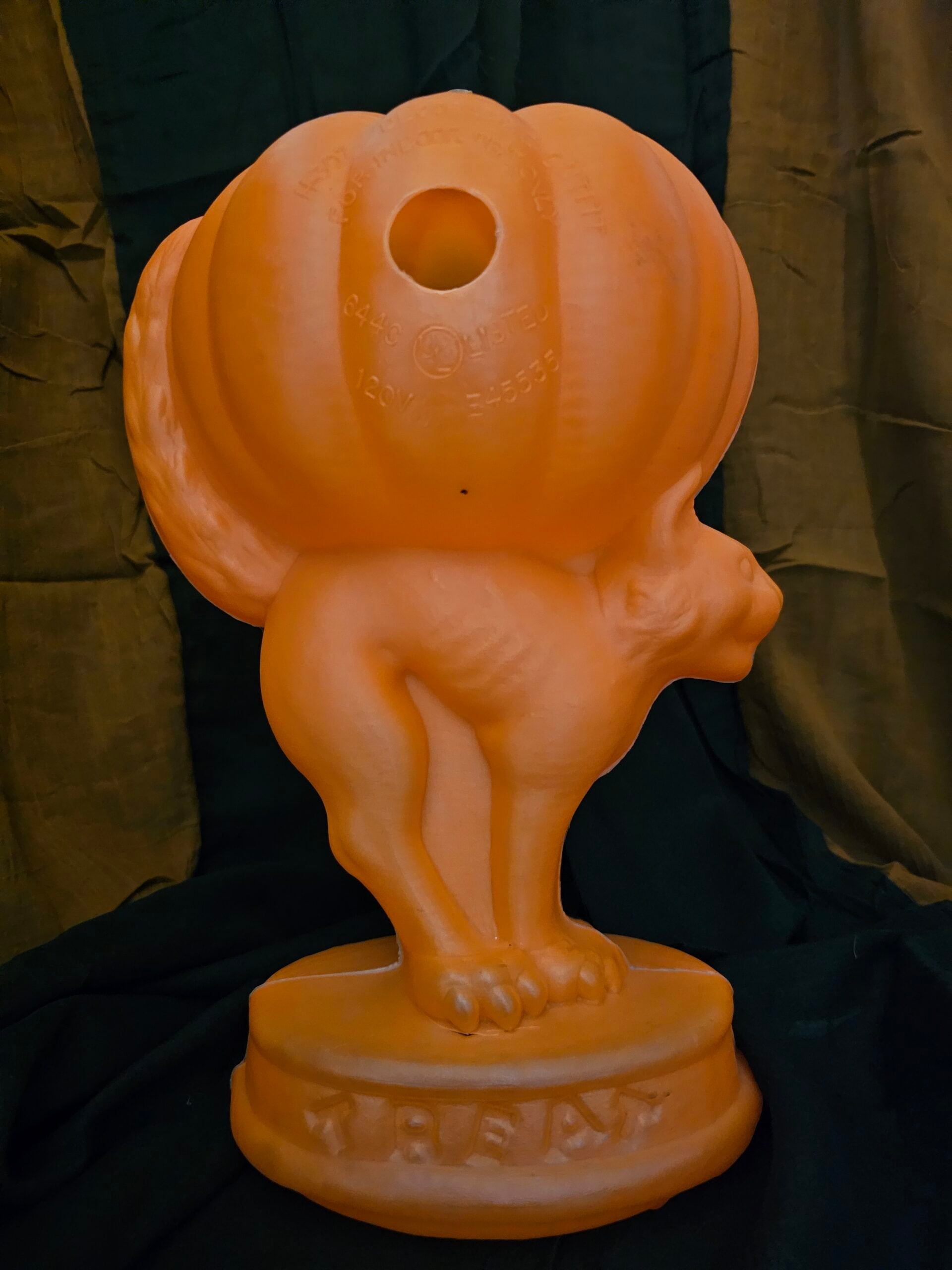
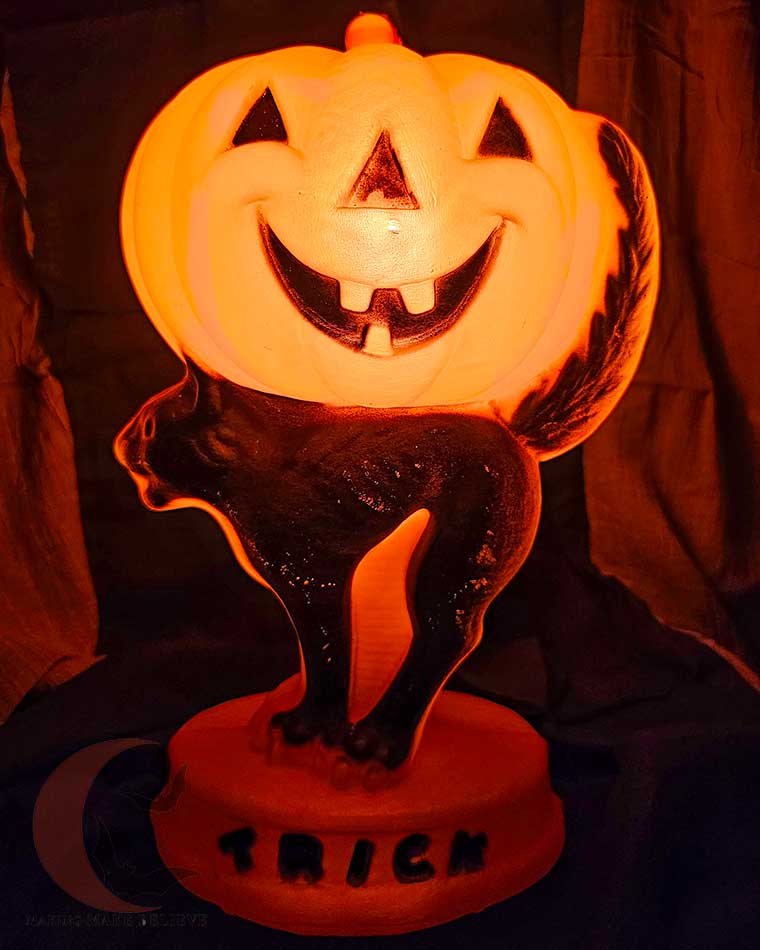
This Black Cat On Pumpkin Trick has enjoyed a long production run, having first appeared in the late 1960s and still going strong into the 1980s. The scaredy-cat balances a cheeky, grinning jack on its back while standing on a base labeled Trick. Turn this piece around, and you’ll find the back void of paint but with a different label: Treat.
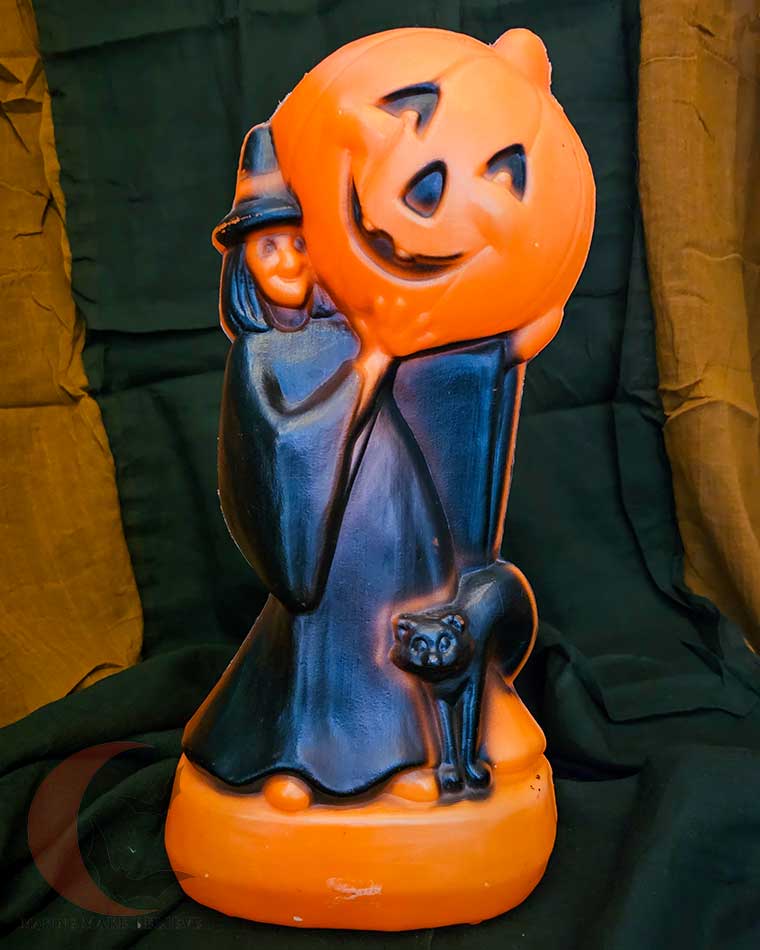
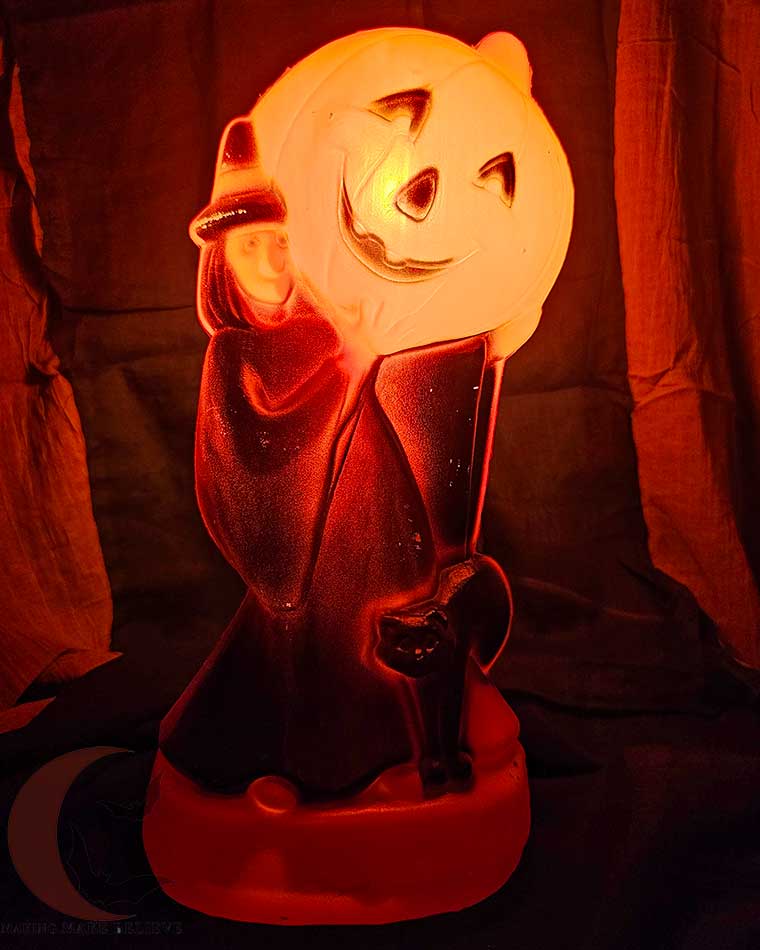
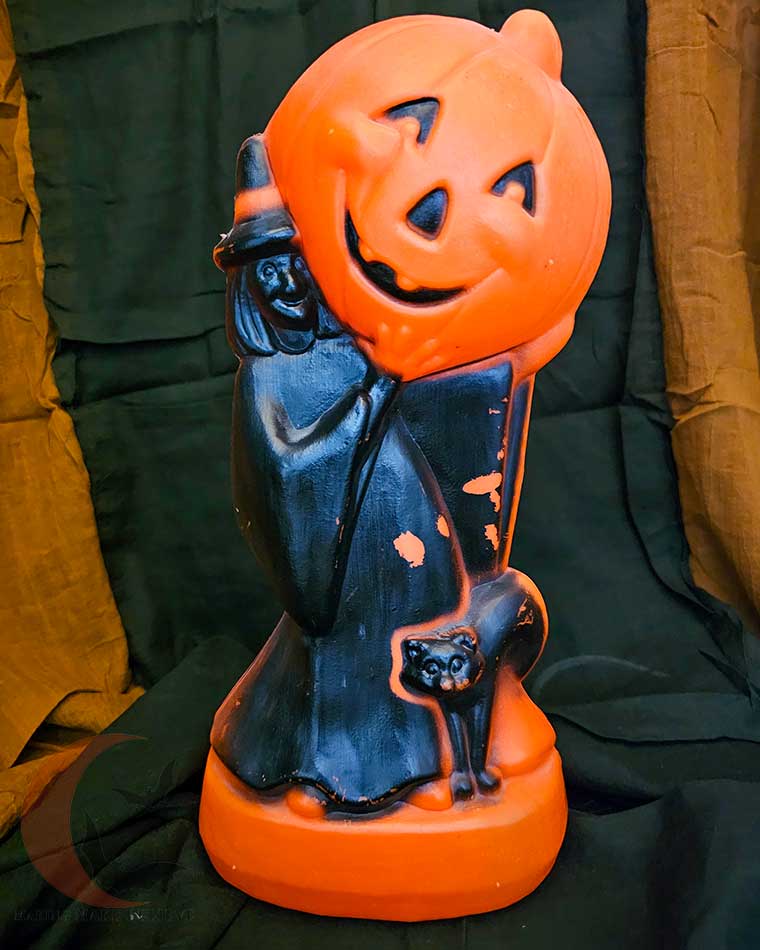
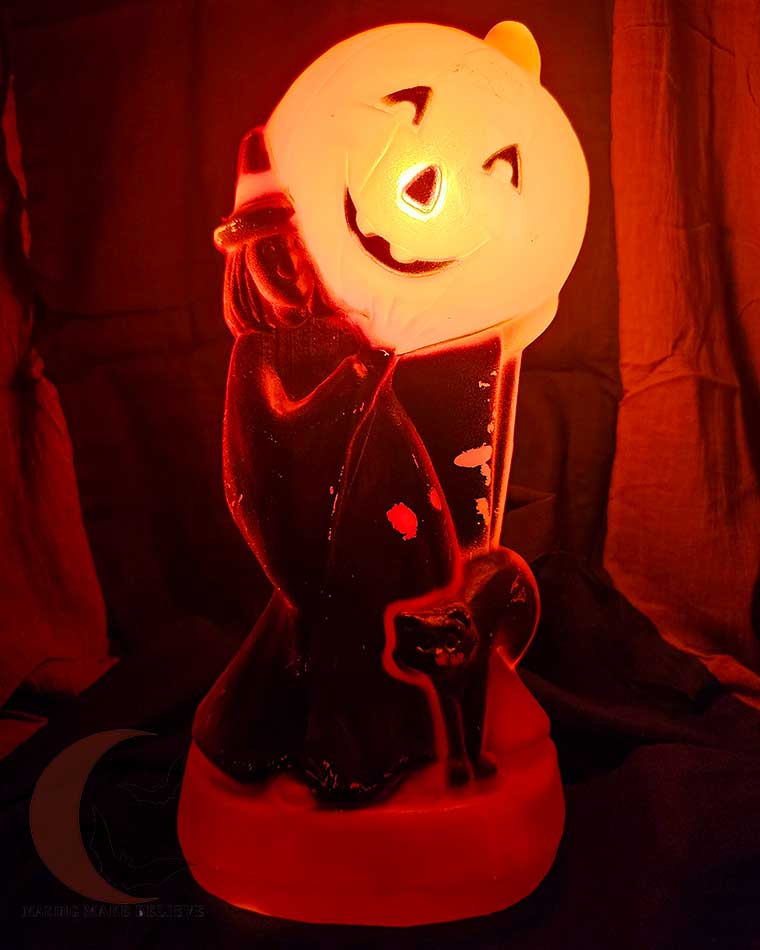
The Wicked Old Witch Lamp was released in two versions – one with an orange face (1971 to 1990s) and one with a black face (1990s only?). We are lucky enough to have both! The witchy holds up a sweet and cheerful jack-o’-lantern while a black cat brushes against her. I don’t think she is properly named, as she appears more charming than wicked.
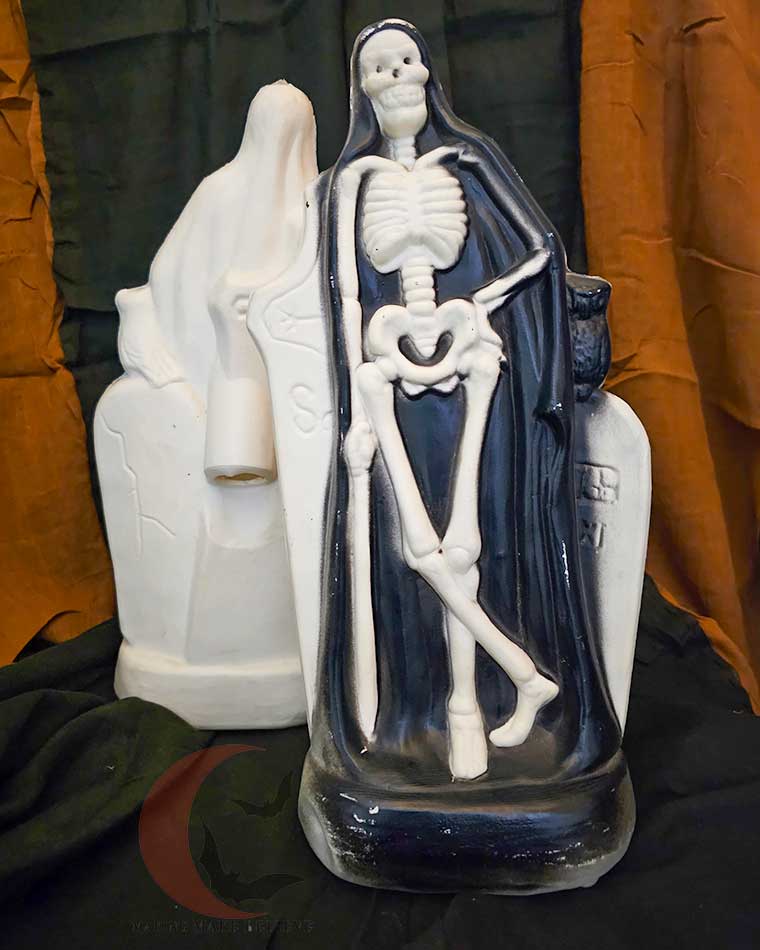
Happy Skeleton or Grim Reaper? Both names have been given to this bony little fellow. Dressed in a long black cloak, cane in hand, this skellie leans back into a tombstone – perhaps his own? Produced from 1971 to the 1980s, he is a bit harder to find, but we are fortunate to have two in our Museum of Mischief.
Tico Toys, also known as Toy Industries Co., operated under its well-known parent company E. Rosen Company (responsible for all those adorable hard plastic candy containers from the 1940s and 50s). Located in Pawtucket, Rhode Island, it produced candy containers, blow molds, and various plastic decorations. Mostly active in the 1950s through the 1960s, Tico Toys closed in the 1970s.
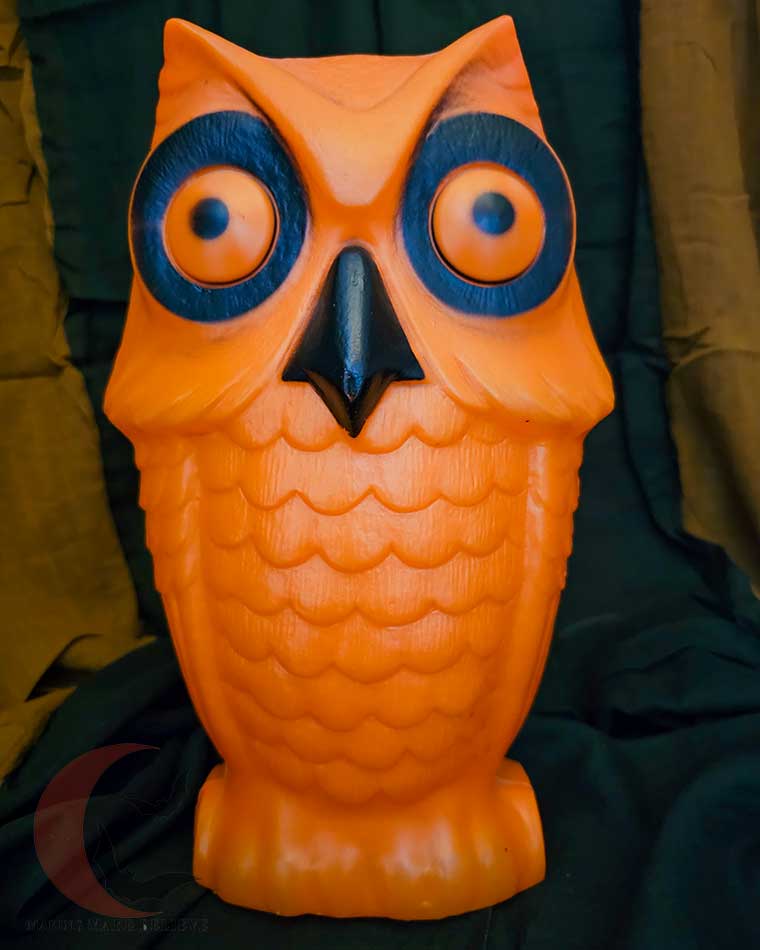
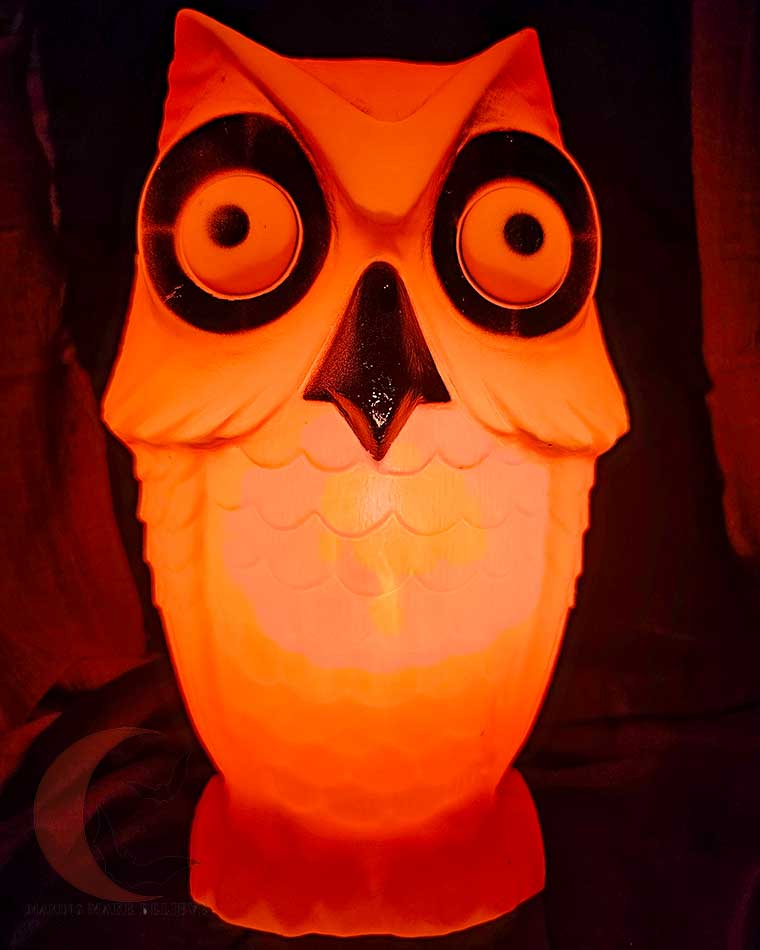
This Owl lamp is the only piece from this maker in our collection. Wide-eyed and nicely detailed from his chest feathers to his talons, this one makes a big statement. First appearing in their 1967 catalog (a very good year), it was last spotted in advertising in 1972.
Blinky Products was founded in 1967 in Ayer, Massachusetts, by Mr. and Mrs. Wilber. That’s all we’ve got – just Mr. and Mrs. – no first names, no deep history. We do know that the Wilbers sold to Regis and Patrick Magnus of Plastic Assembly Corporation in 1978. PAC dissolved in 2010, and Patrick resurrected the company in 2011 as Blinky Products. They are still in business today.
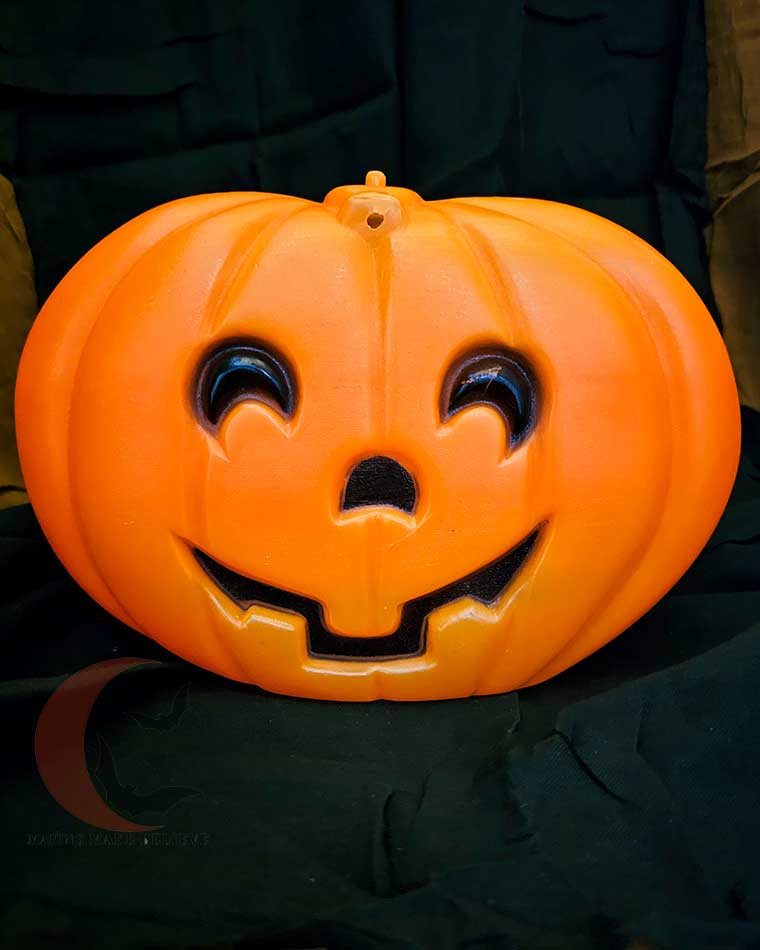
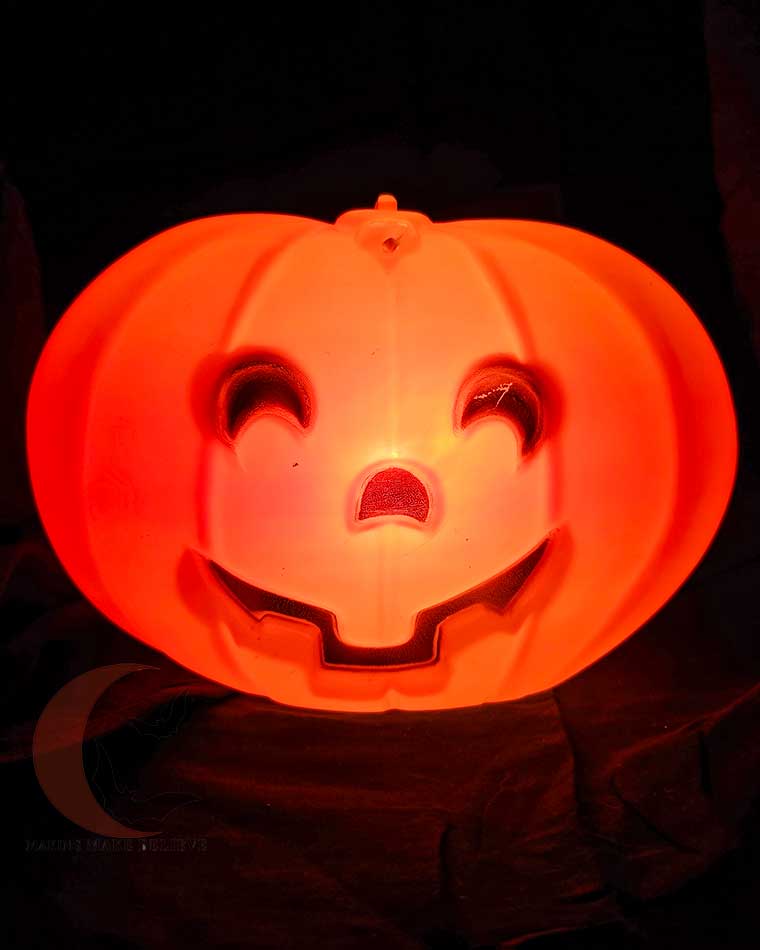
This popular pumpkin likes to hang out on walls and in windows, and he does it perfectly because he’s flat. Measuring only a couple of inches deep, the Pumpkin Glow Lite is a fan favorite and not too hard to find. He’s often still located in his box even though he is finally entering his vintage era, having been produced from the 1980s to 2000.
That concludes our vintage Halloween blow mold tour. Which one was your favorite? If you missed one of the tours, be sure to check out the rest of our collection from Bayshore Industries and Empire.
I hope this shed a little light on these ghostly glow-ups from the past, and may the Halloween spookies smile on you in your search for vintage Halloween blow molds.
Until next time – stay spooky.

